


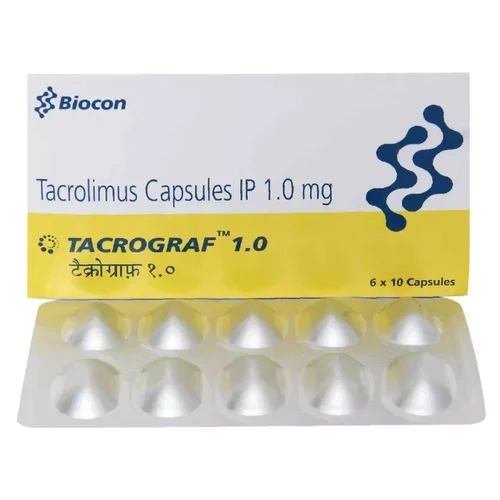
Hover to zoom available on desktop
Premium Pharmaceutical
1.0 MG Tacrolimus Capsules IP
Drug TypeGeneral Medicines
CategoryCapsules
1.0 MG Tacrolimus Capsules IP Specification
Origin of MedicineIndia
Pacakaging (Quantity Per Box)6x10 Capsules
Drug TypeGeneral Medicines
Physical FormCapsules
Dosage1mg
Dosage GuidelinesAs per doctor suggestion
Storage InstructionsDry & Cool place
1.0 MG Tacrolimus Capsules IP Trade Information
Minimum Order Quantity50 Packs
Payment TermsCash in Advance (CID)
Supply Ability5000 Packs Per Month
Delivery Time2-10 Days
Main Domestic MarketAll India
About 1.0 MG Tacrolimus Capsules IP
1.0 MG Tacrolimus Capsules IP is a general medicine used for the prevention of organ transplant rejection in adults. These capsules are manufactured in India and come in a packaging of 6x10 capsules. The recommended dosage of these capsules is 1mg, which should be taken as per the doctors suggestion. The physical form of the medicine is capsules that should be stored in a dry and cool place to maintain their efficacy. These capsules contain tacrolimus as their active ingredient, which works by suppressing the immune system to prevent the rejection of transplanted organs.
FAQs of 1.0 MG Tacrolimus Capsules IP
QWhat is the recommended dosage for 1.0 MG Tacrolimus Capsules IP?
AThe recommended dosage for these capsules is 1mg, which should be taken as per the doctors suggestion.
QWhat is the packaging quantity of these capsules?
AThese capsules come in a packaging of 6x10 capsules.
QWhat is the active ingredient in 1.0 MG Tacrolimus Capsules IP?
ATacrolimus is the active ingredient in these capsules.
QWhat is the storage instruction for these capsules?
AThese capsules should be stored in a dry and cool place to maintain their efficacy.
QWhat is the use of 1.0 MG Tacrolimus Capsules IP?
AThese capsules are used for the prevention of organ transplant rejection in adults.